- General Farm Hardware
- Fencing
- Equine / Horse Gear
- Livestock Equipment
- Animal Supplies
- Bosag Rural
- DIY Building Hardware
- Popular Products
- Rural Accessories
- Specials
- TOOLS
- TRADE BUSINESS
- Work Wear
- CLEARANCE
- Clearance Items

Date Posted:7 April 2026
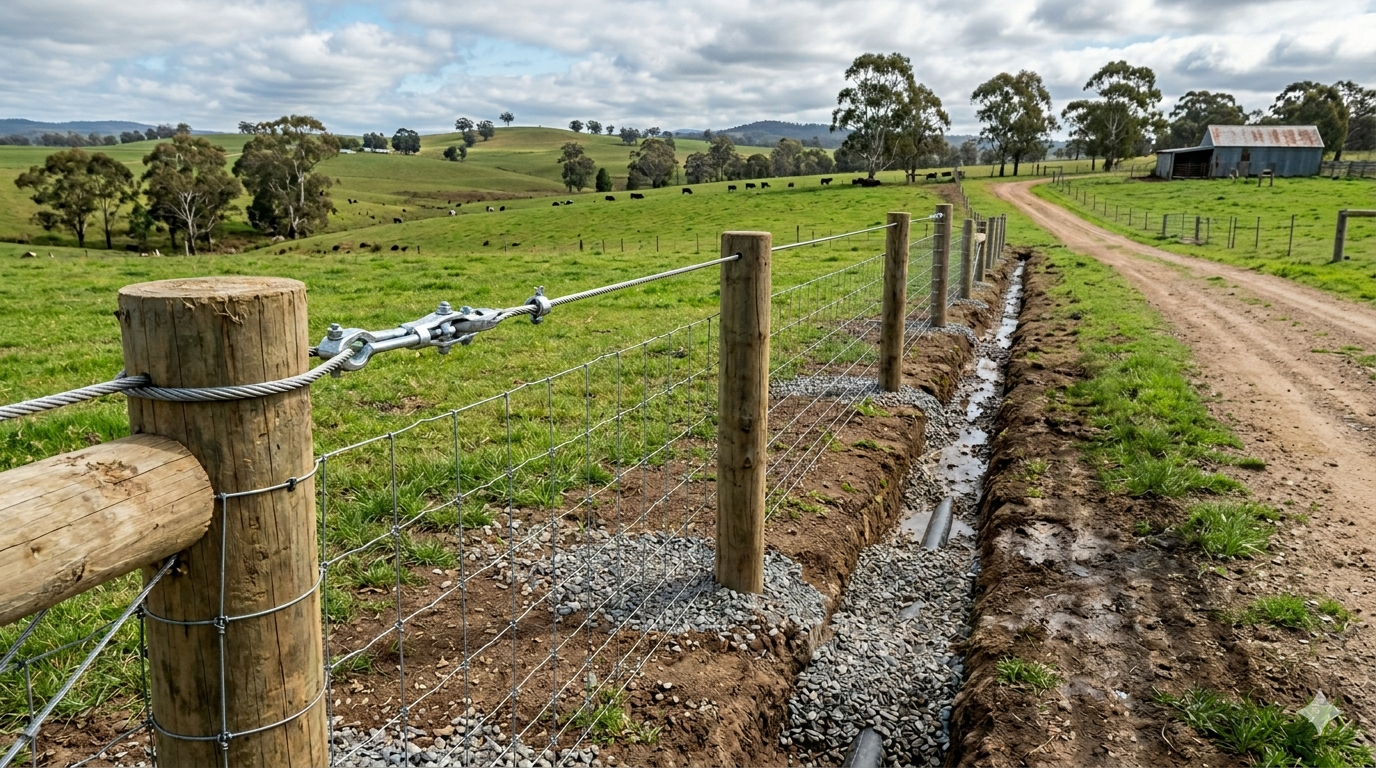
Feature: Steel cable + fastening hardware
Proper drainage planning is essential for maintaining strong and durable fencing systems on Australian farms. Poor water management can lead to soil erosion, fence instability, and damage to livestock yards. By improving drainage around fence lines and yard areas, farmers can protect infrastructure, reduce maintenance costs, and support long-term farm productivity.
Excess water buildup can weaken fence posts, loosen soil structure, and cause fencing materials to deteriorate faster. During heavy rainfall or flooding events, poorly drained areas may lead to fence collapse or livestock safety risks. Effective drainage systems help control water flow and protect fencing foundations.
Good drainage helps farmers achieve:
Steel cable is commonly used to reinforce fencing structures in areas prone to soil movement or water impact. It provides additional tension support and helps stabilise fencing assemblies in challenging terrain. Corrosion-resistant steel cables are especially valuable in wet environments where durability is critical.
Farmers often use reliable fastening and cable systems such as the heavy-duty steel cable fastening tools available on FarmUp (https://www.farmup.com.au/tension-tool-heavy-duty-wire-joiner-accepts-fastli) to improve installation strength and ensure long-lasting performance.
High-quality fastening hardware plays an important role in maintaining fence integrity. Proper fasteners help secure cables and fencing components, preventing loosening due to soil movement or water pressure. Using galvanised or coated hardware helps extend product lifespan and reduces maintenance requirements.
Benefits of strong fastening hardware include:
Effective drainage planning may include surface grading, trenching, or installing drainage channels near fence lines. These strategies help direct water away from posts and yard structures, reducing soil saturation and erosion risks.
Research on agricultural land management highlights the importance of drainage systems in maintaining infrastructure stability and preventing long-term land degradation. Learn more from this external resource on agricultural drainage systems:
https://en.wikipedia.org/wiki/Agricultural_drainage
Farmers can improve fence durability by implementing practical drainage strategies such as:
Strong drainage planning helps protect fencing investments, improves farm efficiency, and supports safer livestock management.
Improve farm durability.